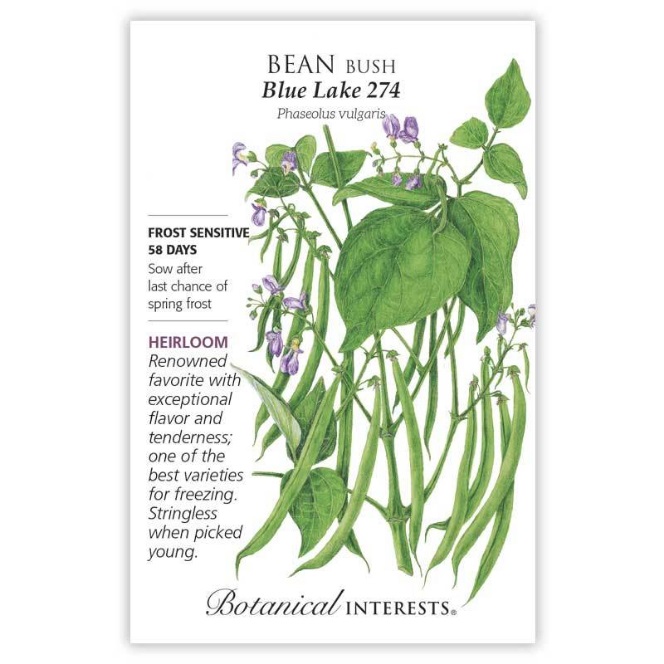
Description
Known for reliability and flavor, 'Blue Lake 274' Snap Bean Seeds produce compact, bush-type plants loaded with tender, stringless green beans. The smooth 6-inch pods develop all at once, making this variety especially well suited for fresh eating, freezing, and preserving. With excellent disease resistance and consistent yields, this classic snap bean remains a top choice for home gardeners.
Designed for both small spaces and traditional garden beds, 'Blue Lake 274' Snap Bean Seeds thrive in containers as well as in-ground plantings. Plants mature quickly and reward growers with an abundant harvest in just under two months. For the best texture and taste, pick pods while they snap cleanly, then enjoy the crisp, homegrown flavor that has made this variety a longtime favorite.
This packet sows up to 20 feet. 60 seeds.
Variety Info:
Botanical Name: Phaseolus vulgaris
Days to Maturity: 58 days
Family: Fabaceae
Native: Mexico and South America
Hardiness: Frost-sensitive annual
Plant Dimensions: 16″–18″ tall, wide
Variety Information: 6″ long, plump, green, smooth, tender pods, white beans. 'Blue Lake 274' is resistant to bean common mosaic virus and NY-15 mosaic. It was developed in 1961 from the 'Blue Lake' pole bean.
Type: Snap bean
Sowing Info:
When to Sow Outside: RECOMMENDED. 1 to 2 weeks after your average last frost date, and when soil temperature is at least 65°F, ideally 70°–85°F. Successive Sowings: Every 7 to 14 days up to 80 days before your average first fall frost date. NOTE: In very hot summer areas, skip sowing as high heat approaches; temperatures consistently above 90°F will prevent beans from forming.
When to Start Inside: Not recommended.
Days to Emerge: 6–12 days
Seed Depth: 1″
Seed Spacing: 1 seed every 4″
Row Spacing: 24″
Thinning: Not required
Growing Info:
Harvesting: Snap beans are ready to pick when the pod “snaps” or breaks in half cleanly. This is when the seeds have just begun to form and the pods are several inches long (depending on the variety). Hold the stem with one hand, and the pod with the other hand to avoid pulling off branches, which will continue to produce. At season's end, plants are great compost material if they are disease-free.


