Description
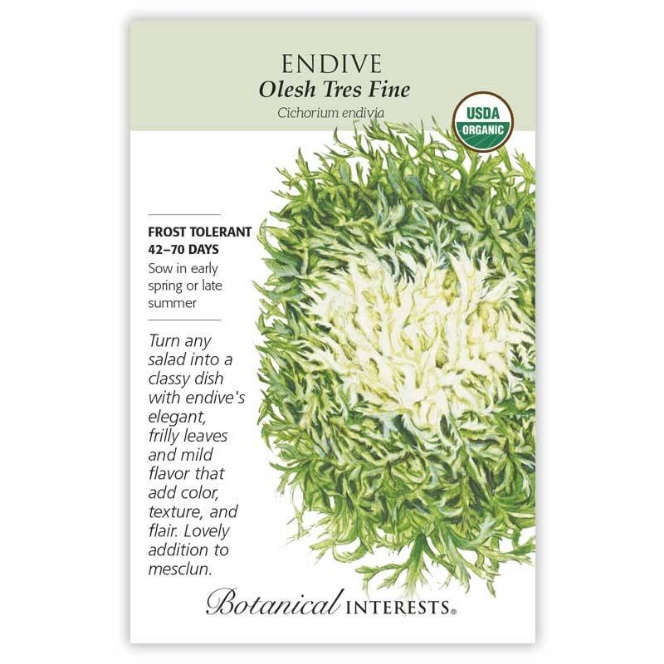
Add a touch of elegance to your garden with Olesh Tres Fine endive, a frisée variety prized for its delicate, lacy leaves and mild, slightly bitter flavor. This rosette-shaped plant features broad, slightly crinkled green leaves that bring texture and visual appeal to salads, mesclun mixes, and even ornamental beds. Frost-tolerant and perfect for cool-season growing, Olesh Tres Fine endive develops its best flavor after light frosts, making it ideal for home gardeners seeking an upscale, bistro-style green.
Compact and easy to grow, Olesh Tres Fine endive reaches about 6″ tall and wide, thriving in a variety of climates. Harvest leaves individually in a cut-and-come-again method or cut the entire head when mature for maximum flavor. With morning harvests and optional cooling in ice water, these tender greens will stay crisp and flavorful for fresh salads or elegant garnishes.
This packet sows up to 37 feet. 230 seeds.
Variety Info:
Botanical Name: Cichorium endivia
Days to Maturity: 42–70 days
Family: Asteraceae
Native: Cultivated; origin unknown
Hardiness: Frost-tolerant biennial grown as an annual
Plant Dimensions: 6″ tall and wide
Variety Information: Rosette with broad, slightly crinkled green leaves with a flavor similar to slightly bitter lettuce.
Sowing Info:
When to Sow Outside: 4 to 6 weeks before your average last frost date, as soon as soil can be worked, or 8 to 10 weeks before your average first frost date. Mild Climates: Sow in fall and winter for cool–season harvest. Ideal soil temperature for germination is 60°–70°F; soil temperature over 78°F halts germination.
When to Start Inside: 8 to 10 weeks before your average last frost date; transplant outside 4 to 6 weeks after starting inside.
Days to Emerge: 10–14 days
Seed Depth: 1/8″
Seed Spacing: A group of 3 seeds every 6″
Row Spacing: 18″
Thinning: When 1″ tall, thin to 1 every 6″
Growing Info:
Harvesting: Harvest in the morning and before temperatures get above 90°F. You might want to discard the outer leaves, as they tend to be more bitter than inner leaves. Dunk plants in cold or ice water to cool, then drain before storing. The leaves can actually be harvested any time in a ôcut-and-come-againö fashion; this is particularly good when seeds are sown too late in the spring, and warm weather is approaching quickly, threatening to cause plants to bolt. In fall, harvest after first couple of light frosts; flavor is actually improved with light frost. When plants are 6″ across, entire head can be cut at the base.


