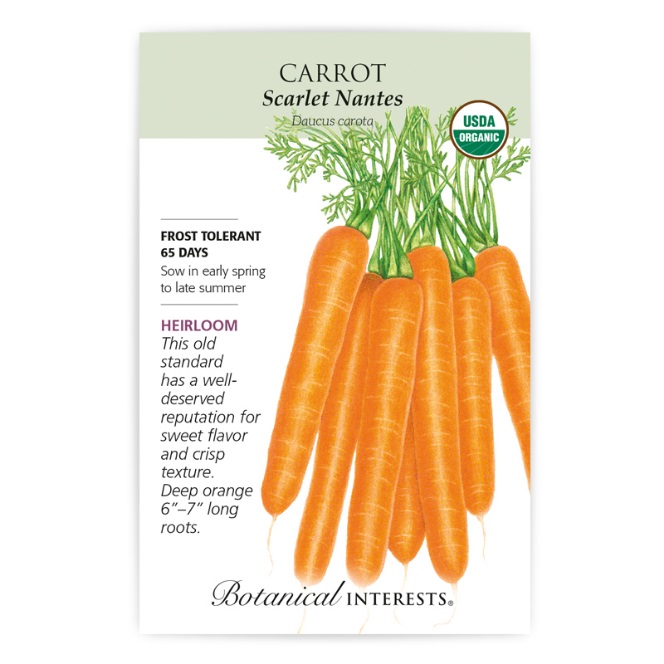
Description
Sweet, crisp, and reliable, Scarlet Nantes carrots are a classic French variety cherished for their tender, nearly coreless roots. Growing 6″-7″ long, Scarlet Nantes carrots produce deep orange, cylindrical roots that are perfect for fresh snacking, adding to salads, or cooking. This heirloom variety, dating back to the 1850s, offers abundant yields and consistent quality, making it a favorite for home gardeners seeking dependable performance.
Ideal for successive sowings, Scarlet Nantes carrots provide a continuous harvest throughout the growing season. With their naturally sweet flavor, smooth texture, and impressive productivity, these versatile carrots are a standout choice for any garden, adding both color and nutrition to your meals.
This packet sows up to 34 feet. 410 seeds.
Variety Info:
Botanical Name: Daucus carota
Days to Maturity: 75 days
Family: Apiaceae
Native: Africa, Eurasia
Hardiness: Frost-tolerant biennial grown as an annual
Plant Dimensions: Roots are 6″–7″ long at their peak
Variety Information: Deep orange, sweet, crisp, cylindrical root; nearly coreless. 'Scarlet Nantes' is a Nantes type carrot.
Sowing Info:
When to Sow Outside: RECOMMENDED. 2 to 4 weeks before your average last frost date, and when soil temperature is at least 45°F, ideally 60°–85°F. Successive Sowings: Every 3 weeks until 10 to 12 weeks before your average first fall frost date. In very warm climates, carrots are grown primarily in fall, winter, and spring.
When to Start Inside: Not recommended; root disturbance stunts growth.
Days to Emerge: 10–25 days
Seed Depth: ¼”
Seed Spacing: 1″
Row Spacing: 6″
Thinning: When 1″ tall, thin to 1 every 3″
Growing Info:
Harvesting: For best flavor and texture, harvest carrots any time before, and until they reach their optimal size. Peak harvest period lasts about 3 weeks, longer in the fall. Late summer-sown carrots are sweetened after having been kissed by light frost; however, harvest before soil freezes, which may destroy the crop. In USDA zone 5 or warmer, carrots can be left in the ground for storage provided they are heavily mulched; harvest as needed on days the ground is not frozen.


