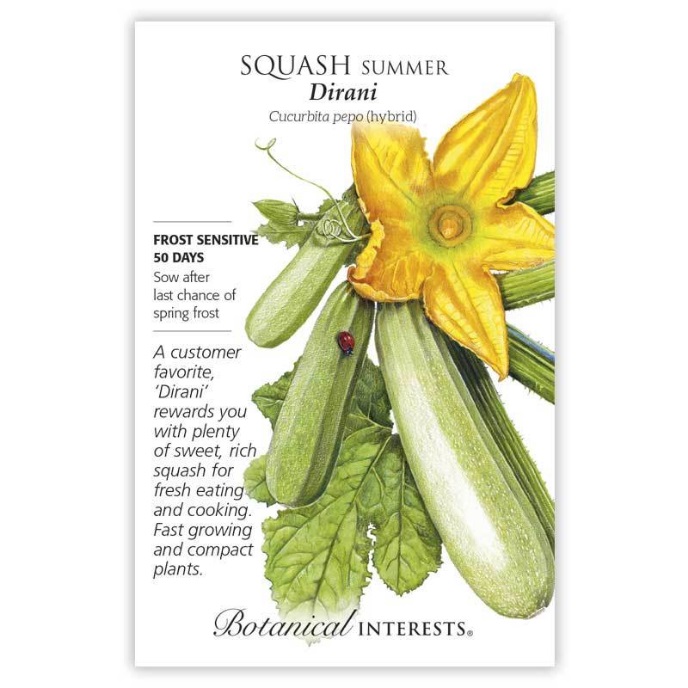
Description
'Dirani' squash is a compact, bushy variety perfect for enjoying all summer long, known for its versatility in dishes like the Middle Eastern favorite Koosa (recipe included). The light greenish-white fruits, speckled with darker spots, are best harvested when 6″–7″ long, offering a tender texture ideal for stuffing or baking. The plant's bushy habit ensures continuous fruit production throughout the growing season, while its large leaves provide excellent coverage to protect the fruits. Whether used fresh or as a stuffed delight, 'Dirani' is a must-have in any zucchini recipe.
This packet sows up to 6 mounds. 12 seeds.
Variety Info:
Botanical Name: Cucurbita pepo (hybrid)
Days to Maturity: 50 days
Family: Cucurbitaceae
Native: North America
Hardiness: Frost-sensitive annual
Plant Dimensions: Bushy and compact, 36″ wide
Variety Information: Best picked at 6″–7″ long, light greenish-white with speckles
Type: Bush
Attributes: Good for Containers
Sowing Info:
When to Sow Outside: RECOMMENDED. 1 to 2 weeks after your average last frost date, and when soil temperature is 70°–85°F.
When to Start Inside: Not recommended except in very short growing seasons, 2 to 4 weeks before transplanting. Roots are sensitive to disturbance; sow in biodegradable pots that can be planted directly into the ground. Transplant when soil temperature is at least 60°F.
Days to Emerge: 5–10 days
Seed Depth: ½”–1″
Seed Spacing: 2–3 seeds per mound
Row Spacing: 3'–4'
Thinning: When 3 leaves, thin to 1 plant per mound
Growing Info:
Harvesting: Harvest frequently to increase yield; squash seem to get monstrous overnight. While edible at almost any size, seeds are less developed in young fruit, therefore more tender. Using a knife or clippers, cut squash off including some of the stem. By including stem, the fruit is sealed and less likely to mold or dry out. Harvesting Blossoms: Look for male, non-fruit producing flowers that have long stems and harvest just before use (female flowers have a swollen mini-squash at the base of the flower and are on shorter stems).