Description
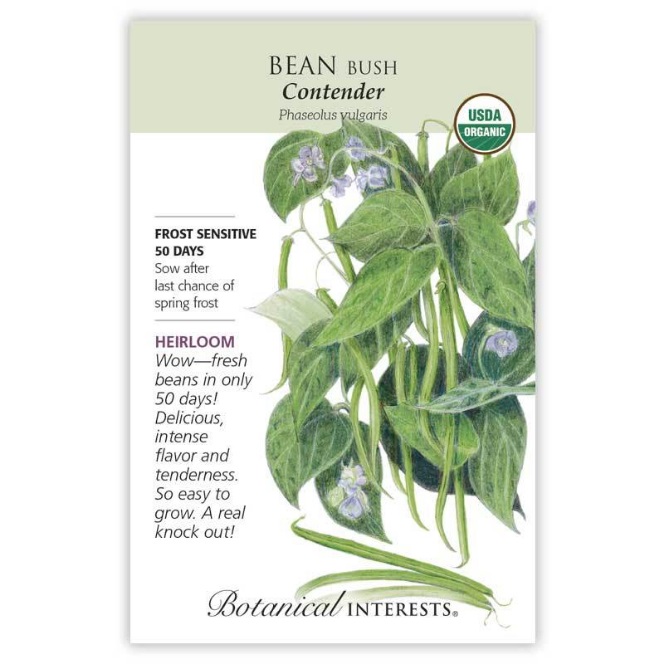
Trusted for decades, 'Contender' Snap Bean Seeds deliver dependable, flavorful pods that are a favorite in home gardens. This classic bush variety produces tender, stringless 6–8″ beans in just 50 days, offering a generous harvest all at once. With smooth, slightly curved pods, 'Contender' combines excellent taste with impressive reliability, making it ideal for fresh eating, freezing, or canning.
Built to perform where other beans may struggle, 'Contender' Snap Bean Seeds are heat-tolerant and resistant to powdery mildew and common bean mosaic virus. Compact, bushy plants grow 12″–20″ tall, thriving in both garden beds and containers. Regular harvesting ensures crisp, flavorful pods, while the sturdy plants continue producing throughout the season for a consistent, high-quality crop.
This packet sows up to 16 feet. 48 seeds.
Variety Info:
Botanical Name: Phaseolus vulgaris
Days to Maturity: 50 days
Family: Fabaceae
Native: Mexico and South America
Hardiness: Frost-sensitive annual
Plant Dimensions: 12″–20″ tall, wide
Variety Information: 6″–8″ long, round-oval, slightly curved pods. Also resistant to common bean mosaic virus.
Type: Snap bean
Sowing Info:
When to Sow Outside: RECOMMENDED. 1 to 2 weeks after your average last frost date, and when soil temperature is at least 65°F, ideally 70°–85°F. Successive Sowings: Every 7 to 14 days up to 80 days before your average first fall frost date. NOTE: In very hot summer areas, skip sowing as high heat approaches; temperatures consistently above 90°F will prevent beans from forming.
When to Start Inside: Not recommended.
Days to Emerge: 6–12 days
Seed Depth: 1″
Seed Spacing: 1 seed every 4″
Row Spacing: 24″
Thinning: Not required
Growing Info:
Harvesting: Snap beans are ready to pick when the pod “snaps” or breaks in half cleanly. This is when the seeds have just begun to form and the pods are several inches long (depending on the variety). Hold the stem with one hand, and the pod with the other hand to avoid pulling off branches, which will continue to produce. At season's end, plants are great compost material if they are disease-free.